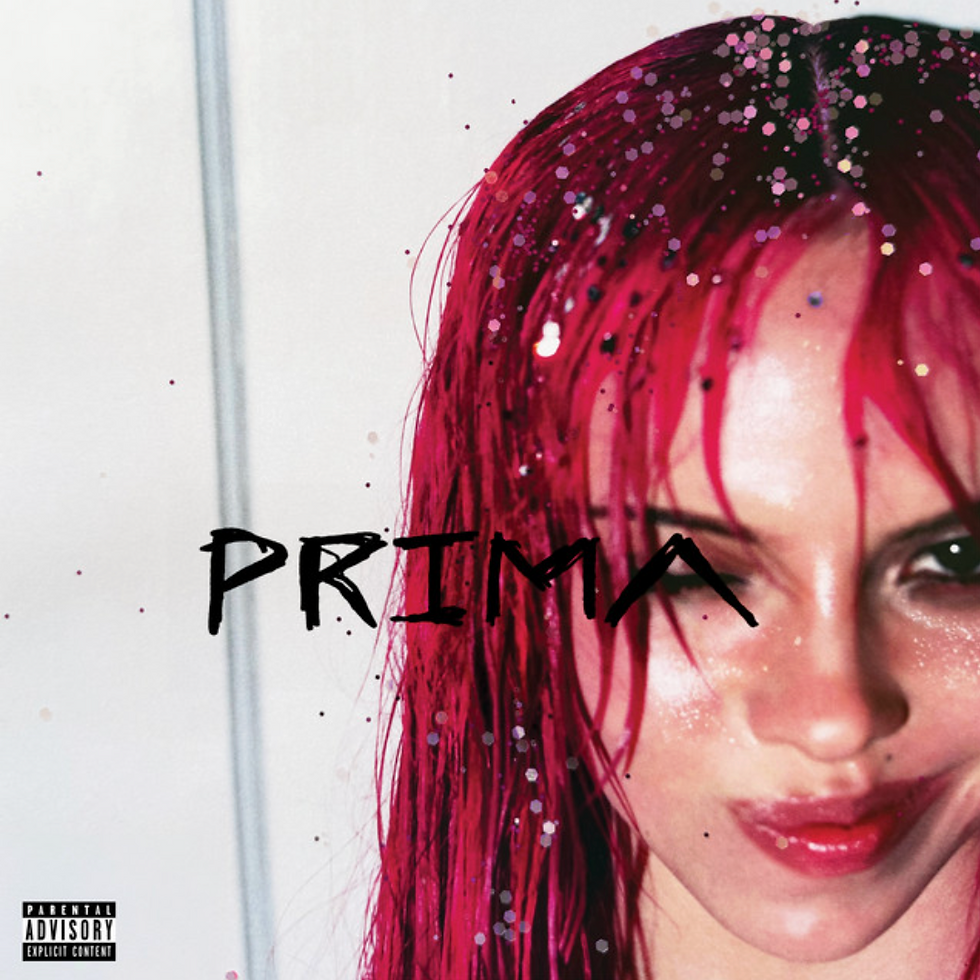
ADÉLA "PRIMA" Album Review

Magda Kanecka & Sanne Boere | September 2026
Slovakia’s pop princess is back!
Following the successes of her singles “KGB” and “Red Bottoms”, and the domination of “Ain’t In LA” across social media this summer, Adéla Jergová’s debut album landed in our music catalogues on September 4.
The title of the album – “PRIMA” – forms a clever reference to Prima Ballerina, the higher ballet rank given Adéla’s background as a ballet dancer. The title additionally references the Italian word translating to “first”, with this release being her first full-length record.
Delving into themes of insecurity, desire, and her upbringing, this (disco)pop record has something in store for everyone. Let’s dive in!
Magda:
Track 1: “KGB”
BRUITMag. had the pleasure of reviewing the first single from this LP when it was first released in April this year. Click below to check out our thoughts!
Track 2: “Nicole Kidman”
I fell in love with this track from the first listen… Catchy, playful, bold, and unapologetic, this song feels so quintessentially Adéla at its core, and I am sure it is one of her strongest tracks in terms of production.
The lyrics of the track cleverly reference Nicole Kidman’s role in Halina Reijn’s movie Babygirl (2024) – “Babygirl in control / I feel like Nicole”. Later, the music video, released on the same day as the album, takes the referencing to the next level: with direct anecdotes to Kidman’s filmography and roles in Eyes Wide Shut (1999), Moulin Rouge! (2001) and Birth (2004), along with her iconic Covid-era AMC Theatres commercial.
This is a ridiculously fun track that knows exactly what it wants to be, and I especially adore how the song fades out in the outro. It’s the perfect finishing touch as Adéla makes each listener “feel like Nicole” – a star of bold characterisation and no shame in her expression. It’s a great shame Nicole Kidman didn’t star in the music video this time around.
Track 3: "I'm The Man"
The lyrics of track three explore avoidance while challenging traditional gender roles, with Adéla describing that she sometimes feels she “is the man” in relationships where she takes on a more leading role.
This is expressed particularly through lines such as “I like to take you out to dinner / I’m waving down the waiter / No need to pay me later” – almost making fun of traditionally male dating expectations, while adopting the roles herself. This technique of mocking systems that do not accommodate her is something Adéla has previously utilised on other tracks, such as on “KGB”, which pays close tribute to her roots of growing up as a woman in the age of post-USSR Eastern Europe, disguised under a title with rather strong historical connotations.
In its sound, I’m a big fan of the synth and subtle electronic elements in the production of this track. While I wish the song were longer, it still carries a great message without sounding too repetitive, all the while toning the tempo down from the previous, more upbeat track.
Track 4: "Boys"
In Adéla’s own words, “Boys” is about “being at the club with your girls and getting bothered by boys” – an experience arguably relatable to most women who have ever been on a girls’ night out. Musically, the track leans into glossy and playful mid-2000s chart sound, with hints of Britney Spears’ vocal and Timbaland’s production energy lingering throughout.
More interestingly, “Boys” features the voice of KATSEYE’s Lara Raj, whom Adéla featured alongside in the survival show and later Netflix series Dream Academy (2023). Lara’s feature entails a conversation between her and Adéla, as if to mirror a conversation from a girls’ bathroom in a club. It’s a laidback addition that, to those who are familiar with Dream Academy, immediately makes you go: “Wait, is that Lara?”
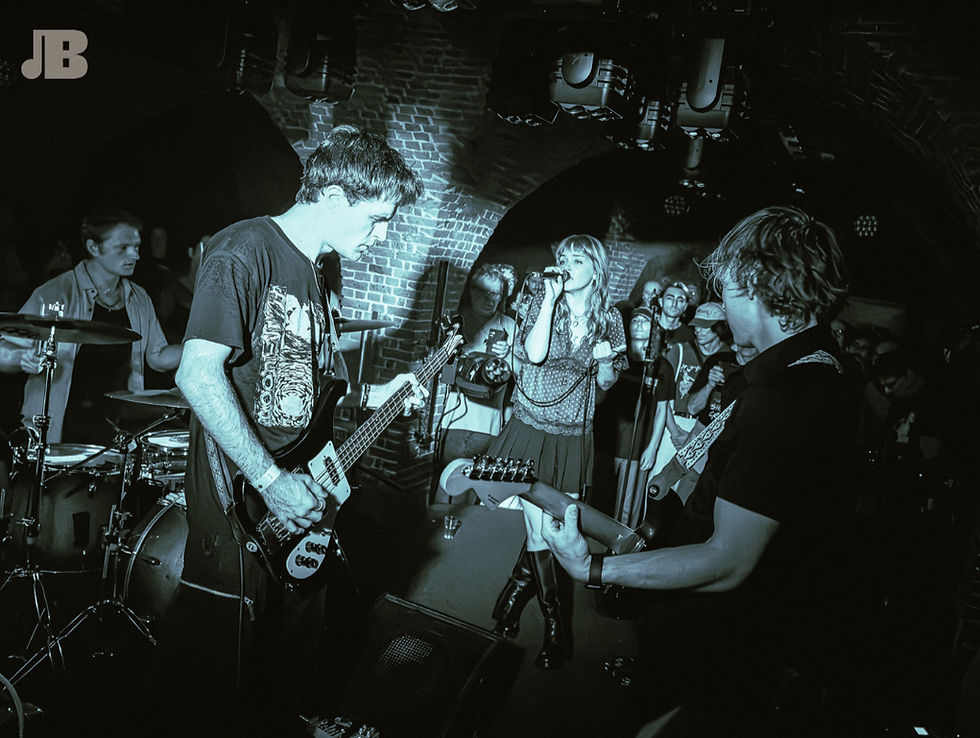
Jergova debuted the track in April 2026 while opening for Demi Lovato’s It’s Not That Deep Tour – and the song has found its home within her live show setlists since then.
Track 5: "Red Bottoms"
A notably vulnerable point in the tracklist’s tempo and lyricism, “Red Bottoms” speaks of the singer-songwriter’s feelings of not being good enough for a partner. Built around the imagery of luxury, status and prestige, the song turns expensive shoes into a metaphor for desirability and self-worth, much like the other summer hit “brand new chanel$” by Slayyyter.
Though the two songs differ in sound, underneath all its glamour, “Red Bottoms” is about the fear of giving someone your all and it still not being enough.
Lines like “Nobody wants dirty shoes / Nobody wants dad issues / Don’t wanna feel second-hand / Not when it comes to you” make that insecurity hit especially close to home, while the elevated and high-pitched vocals around the chorus add a layer of fragility to the track.
Track 6: “Hitachi”
The first half of this record closes off with a surprisingly sweet and vulnerable track resembling the slow fading of attraction and intimacy within a past relationship. Despite its suggestive title and sexual premise, the song feels more like a reflection on missing a certain emotional closeness that once existed between two people.
The soft humming and light piano notes throughout the track give it an “Eternal Sunshine”-era Ariana Grande feel to it, while the stripped-back production allows Adéla’s vocals to shine through.
An interesting detail I noticed is the clever shift from the lyrics “Touch me, hold me, crave me” into “Touch me, hold me, love me” later in the song, revealing that beneath the provocative surface, what Adéla really wants is to be loved and desired again, not just physically.
Sanne:
Track 7: “Fantasize”
“Fantasize” is where Adéla fully leans into the playful, seductive side of “PRIMA”.
Sitting between the more emotional “Hitachi” and the darker “Starving Artist”, the track brings back some of the cheeky confidence that made her earlier work so distinctive. Its production has a distinctly nostalgic pop feel, with a slick, slightly mischievous instrumental that gives the song an almost Britney-era energy. Adéla’s delivery matches that attitude perfectly, turning the track into something knowingly provocative rather than overly serious.
Lyrically, the song is essentially an unapologetic celebration of attraction and fantasy. Adéla plays with the idea of wanting someone while knowing that desire does not necessarily have to become anything deeper; “This is the part where human nature / Fills me with need and sways my mind / This is the part where I’m no better / The more that I fantasize.”
The strength, in my opinion, comes from how naturally Adéla inhabits this kind of glossy, flirtatious sound. It is fun, confident and knowingly over-the-top – reminding listeners that even on a debut filled with more personal moments, she still knows how to have fun with being a pop star.
Track 8: “Starving Artist”
“Starving Artist” takes the energy of “Fantasize” and gives it a considerably darker edge. Built around heavier, trap-influenced production, the song explores the less glamorous side of relationships, ambition and wanting something, even when it probably isn’t good for you. The track captures the feeling of returning to something familiar because, even if it is imperfect, it is still better than nothing.
What makes the song stand out to me is the way its production mirrors that messy emotional state. The bass-heavy instrumental gives the track a darker, almost claustrophobic atmosphere, while Adéla’s vocal performance becomes increasingly intense as the song progresses. That tension gives “Starving Artist” more emotional weight than its provocative surface might initially suggest.
The ending leaves the song feeling unresolved, which suits its subject perfectly: there is no neat conclusion, just the knowledge that the cycle is probably going to continue.
Track 9: “Marijuana”
With a running time of just under two minutes, “Marijuana” almost feels like a fleeting memory. That brevity is part of its charm, though, because the track captures a very specific kind of late-night nostalgia: impulsive decisions, hazy memories and the carefree feeling of not thinking too hard about what happens next.
The production yet again leans heavily into the mid-2010s, and Adéla even described the song with the sentiment “Life feels like 2014,” making its nostalgic purpose pretty clear.
It is flirtatious, reckless and slightly ridiculous in exactly the way a late-night pop song should be, “I like how you look at me like I’m the next Madonna / Now wanna, now you want it harder.” The track’s lack of seriousness works in its favour, especially after the heavier emotional tension of “Starving Artist.”
Track 10: “Therapy”
Instead of sex, partying and pop-star bravado, Adéla turns inward and confronts the loneliness and pressure that come with chasing her career with “Therapy.” The track strips things back considerably, allowing the emotional weight of the subject matter to take centre stage.
What I think makes “Therapy” interesting is that Adéla lets the cracks show. The song deals with feeling isolated from home and family while trying to build a life and career elsewhere, adding a much more personal dimension to the album’s recurring themes of ambition and reinvention: “I wanna move my mom out here / But I don’t have that kind of money.”
“Therapy” deals with homesickness, uncertainty, and the consequences of chasing a dream, reminding listeners that beneath all the glamour, humour, and provocative one-liners, there is a very real person trying to figure out what it means to leave home and build a life of her own.
Track 11: “Ain’t In LA”
The song takes the familiar fantasy of Los Angeles and turns it on its head, arguing that success, identity and belonging do not necessarily have to exist in one particular place. Instead of treating LA as the ultimate destination, “Enjoy the ride, I know that you might wanna escape / It’s all a lie, the baddest bitches ain’t in LA,” Adéla celebrates the places and people that exist outside of it.
That message is especially personal given her Slovak background, and the track ultimately becomes an anthem about refusing to believe that there is only one definition of success.
There is a deliberate early-2010s nostalgia running through the track, particularly in the way it recalls the pop landscape that influenced her growing up. This makes sense considering Theron Thomas, who co-wrote “Ain’t In LA,” was also a co-writer of Miley Cyrus’ 2013 hit “We Can’t Stop”, with his voice featuring on both tracks.
“Ain’t In LA” gives “PRIMA” the ending it needs. After an album that jumps between confidence, sex, ambition, vulnerability and insecurity, the final track arrives with a sense of clarity. The song’s rise to No. 1 on the Billboard Philippines Hot 100 only adds to that narrative, turning the album closer into a genuine breakthrough moment instead of just another track on a debut album.
At just 31 minutes in length, we found ourselves wishing the release were longer. Regardless, one thing is clear: Adéla is on the right track to pop stardom, and she knows how to get there; with her naturally bright pink hair, bold stage presence, and vocals that have you singing along from the get-go.
“PRIMA” is a mix of playful, direct, and at times controversial tracks that come together to form an album that encapsulates this image even better, for new listeners and Dream Academy (2023) fans alike.
Listen to “PRIMA” here!
Follow ADÉLA here!
Magda’s top 3:
"Nicole Kidman"
"Fantasize"
"Starving Artist"
Sanne’s top 3:
"Fantasize"
"Red Bottoms"
"Nicole Kidman"