Taeyong "WYLD" Album Review
Sanne Boere | June 2026
Few artists have a creative identity as distinctive as Taeyong.
For about a decade now, he’s existed at the centre of some of the industry’s most experimental music; first as the leader of K-Pop group NCT, then through units like NCT 127, and eventually as a soloist who somehow feels even more unpredictable on his own.
Since debuting in 2016, Taeyong has built a reputation as one of K-Pop’s most creatively restless artists. He approaches music with the mindset of someone who genuinely enjoys making things weird. Even in NCT’s famously experimental discography (think: “Sticker” and “2 Baddies”), Taeyong has always stood out as the member most willing to push ideas to their absolute limits.
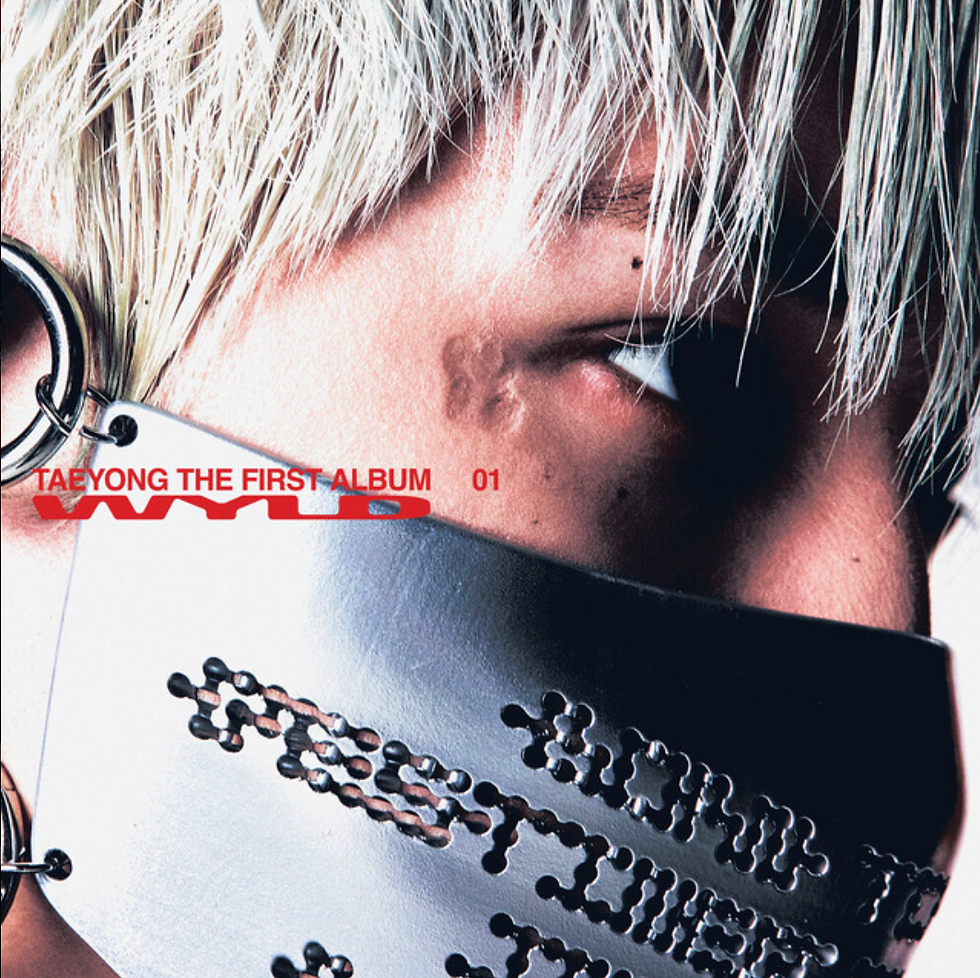
That’s what makes “WYLD” – an alternative spelling for ‘wild’ – feel so fitting as an album title. It isn’t just describing the sound itself, but also Taeyong as an artist.
Following the glitchy maximalism of “SHALALA” ( 2023) and the chaos of “TAP” (2024), “WYLD” feels like the final form of Taeyong’s solo identity so far: louder, stranger, more emotional, and surprisingly self-aware beneath all the noise. It’s an album obsessed with movement (running, dancing, spiralling, crashing out, getting back up again), as if standing still for even a second would physically hurt him.
The same-titled title track “WYLD” opens the album like a declaration of freedom. From the very first “now watch me move, baby,” Taeyong sounds completely unleashed. The production is huge with pounding drums, distorted synths, and chants that feel built for festival crowds. However, there’s still something playful underneath all the aggression.
Lyrically, the song revolves around breaking limitations: “break the frame,” “burn it,” “break the line.” Taeyong has always made music that rejects neat categorisation, and “WYLD” almost sounds like him mocking the idea that he should ever try to fit inside one lane.
“Storm” pushes that intensity even further. It’s one of the hardest-hitting songs Taeyong has released in years – genuinely overwhelming in the best way possible. The imagery throughout the track is massive: lightning strikes, cyclones, earthquakes, thunder crashing through the sky. Taeyong positions himself almost like a natural disaster, impossible to ignore once he arrives.
But what makes “Storm” work isn’t just the power; it’s the confidence. Lines like “you copied me, you’ll pay the price” could sound ridiculous from another artist, but Taeyong sells them completely because his artistic identity has always been so singular. Nobody really sounds or moves like him.
Then the album pivots into “Hypnotic,” which feels like driving through a busy city at 3 AM with neon lights blurring past the windows. Compared to the explosive energy of the first two tracks, this one is smoother and dreamier, but still restless underneath.
There’s something lonely hidden inside the song, too. Even while asking for connection, “I need a girl who gon’ love me / trust me,” Taeyong still sounds emotionally untouchable, floating “above the city” like a ghost. That contrast between confidence and isolation recurs throughout this release.
And then there’s “I’m a Dancing Cactus,” which might be one of the most ‘Taeyong-coded’ songs ever created. Only he could release a track called “I’m a Dancing Cactus” and somehow make it sound cool instead of completely absurd.
The song feels like classic NCT weirdness, filtered through Taeyong’s solo brain: techno beats, surreal imagery, random philosophical lines about “technology” and “no logic at all.” The repeated “[t]he seventh sense is back” reference will absolutely hit longtime fans emotionally, too, recalling “The 7th Sense,” the song that introduced Taeyong to the world in the first place. Ten years later, he still sounds just as experimental, but far more confident in his own identity.
“Mermaid” is where the album becomes unexpectedly tender: hidden beneath the dreamy summer imagery is one of the project’s most sincere love songs. Taeyong describes love almost mythologically here – overwhelming, dangerous, and impossible to escape.
Lines like “[y]ou were my twenties” hit especially hard considering where Taeyong is in his career now. There’s a maturity to “WYLD” that wasn’t always present in his earlier solo work. He still embraces chaos, but there’s more reflection underneath it now. He sounds aware of time passing.
A recurring theme across Taeyong’s solo albums is the “404” tracks. “SHALALA” gave us “404 File Not Found,” “TAP” continued it with “404 Loading,” and now “WYLD” closes the trilogy with “404 Euphoria.” What started as a clever metaphor has slowly evolved into something more personal: Taeyong using technological imagery to describe emotional instability, identity, and loneliness. Each “404” track feels like another stage of someone trying to locate themselves and failing slightly differently every time.
If “404 File Not Found” represented confusion and “404 Loading” felt like searching for meaning, then “404 Euphoria” is the comedown after everything falls apart.
The track is devastatingly empty in places. Images like staring at washing machines in silence, sitting beside a turned-off phone, and replaying memories alone feel painfully mundane, making the heartbreak feel more believable. The repeated “she’s out of my league” refrain sounds like someone convincing themselves to finally let go.
And just when the album risks becoming too emotionally heavy, Taeyong swerves violently back into chaos with “Skiii” and “Hot.”
“Skiii” feels like someone poured internet humour, luxury flexes and nightclub EDM into a blender and somehow created a coherent song out of it. The lyrics are completely unhinged at points (Antarctica references, igloos, “modern art,” environmental protection), but that unpredictability is part of the appeal.
“Hot,” meanwhile, is pure performance energy. Loud, sweaty, and intentionally over-the-top, it feels designed for live stages. The references to H.O.T. and other first-generation K-Pop culture make the track feel like Taeyong paying tribute while still filtering everything through his own lens.
“Feeling Myself” ties the album’s themes together beautifully. Underneath all the flexing and confidence lies someone who spent years obsessively pushing himself to the limit. Lines about dancing alone in front of mirrors until satisfaction finally arrives feel especially revealing. Taeyong’s ambition has always been visible, but here he sounds more aware of the cost behind it.
Then the album closes with “Run,” which might actually be the emotional heart of “WYLD.” After an album full of movement, speed, and sensory overload, Taeyong ends things with a song about repeatedly running back toward someone he knows he should leave behind.
The desperation in the chorus, “run, run, run” over and over again, feels almost exhausting by the end, and that’s exactly the point. “WYLD” constantly frames movement as both freedom and self-destruction. Taeyong keeps moving because stopping would mean sitting alone with his thoughts.
What makes “WYLD” so compelling is that it never tries to smooth out Taeyong’s contradictions. The album is arrogant and insecure, funny and lonely, stylish and emotionally messy.
Some songs sound like warehouse rave music, while others sound like someone spiralling at 4 AM, staring at the ceiling. And honestly, that’s what makes Taeyong such a fascinating solo artist. Plenty of idols can perform concepts, but very few feel like exposing pieces of themselves this directly through chaos.
“WYLD” isn’t always easy to follow. Sometimes it’s overwhelming, sometimes completely bizarre, and sometimes it feels like Taeyong is intentionally throwing listeners into sensory overload just to see who survives. But, underneath all the noise is one of the most unique personal albums released by a K-Pop soloist in years.
Listen to “WYLD” here!
Follow Taeyong here!